SimpleOfflineChess
Chess Timer
Report errors at: SimpleChessOffline@gmail.com
How To Play Chess for Beginners
The Chess Pieces
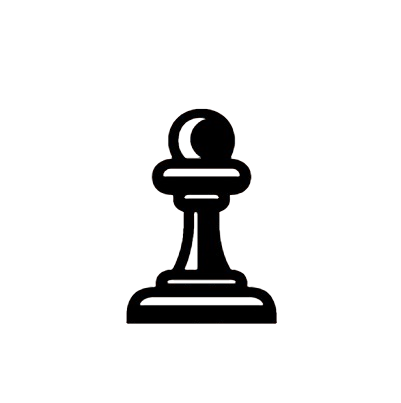
1. Pawn

2. Knight
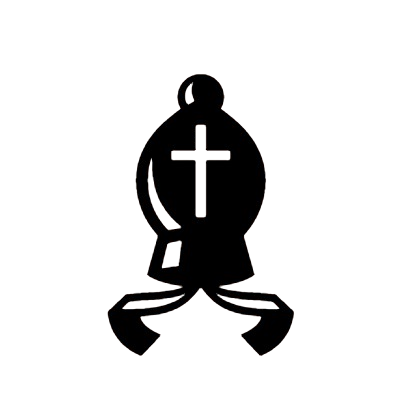
3. Bishop

4. Rook

5. Queen
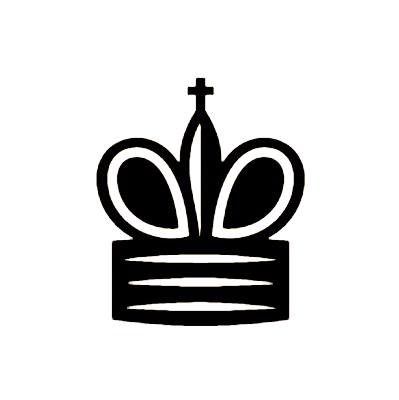
6. King
1. The Pawn, seen in image one is the least valuable piece on the board. As rude as that may sound, each piece on a chess board has a piece value, the pawn has a piece value of 1. As shown in figure 1, The Pawn can move one only step, usually, but two steps when starting the game. The pawn cannot go backwards, and can capture one square diagonally when there's a piece there. It can turn into other pieces when it reaches the end of the opponents side, this is called promotion, it's a magician!
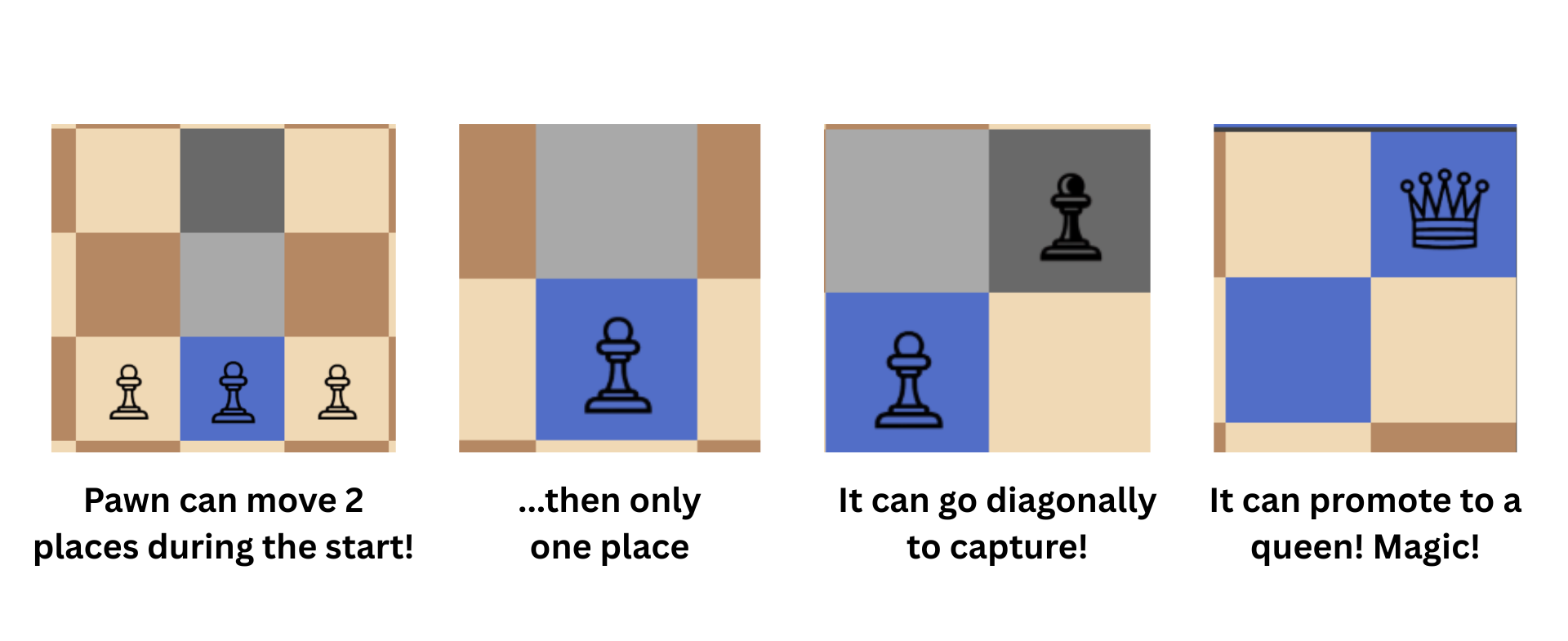
Fig. 1 - How A Pawn Moves
2. Next up, the Knight and Bishop. They're both valued slightly higher than the pawn at a piece value of 3! However, your value does not decide your uniqueness, both of them move completely differently! The knight, moves in a kind of L-Shape as shown in figure 2-1. The Bishop, moves only diagonally, as shown in figure 2-2.
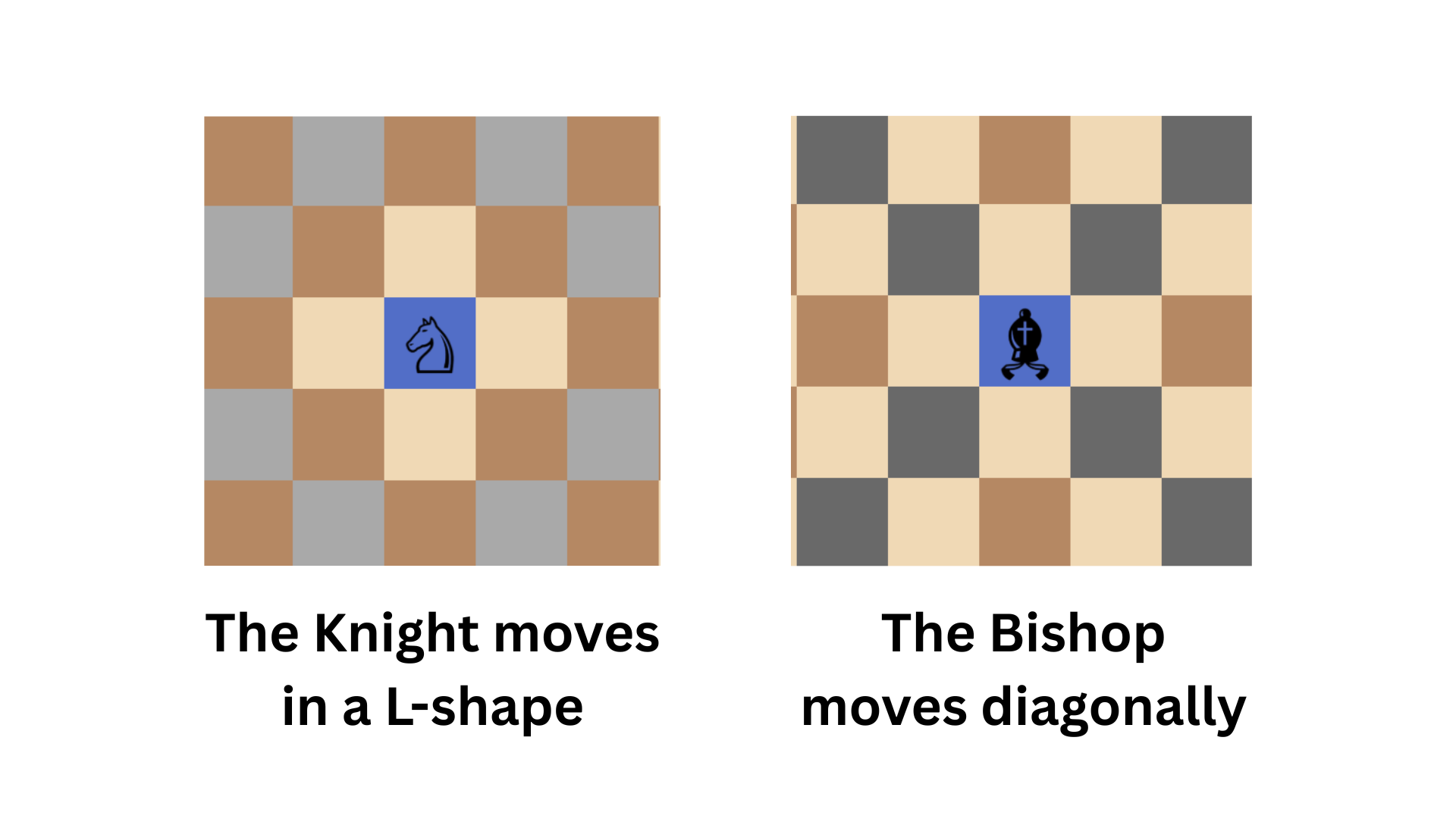
Fig. 2-1 - The Knight Fig. 2-2 - The Bishop
3. The Rook is the next most valuable piece on the list, worth 5 points. It literally looks like a castle, I have no idea who decided to name it rook. Anyways, it can move straight and horizontally in something known as a file, figure 3.
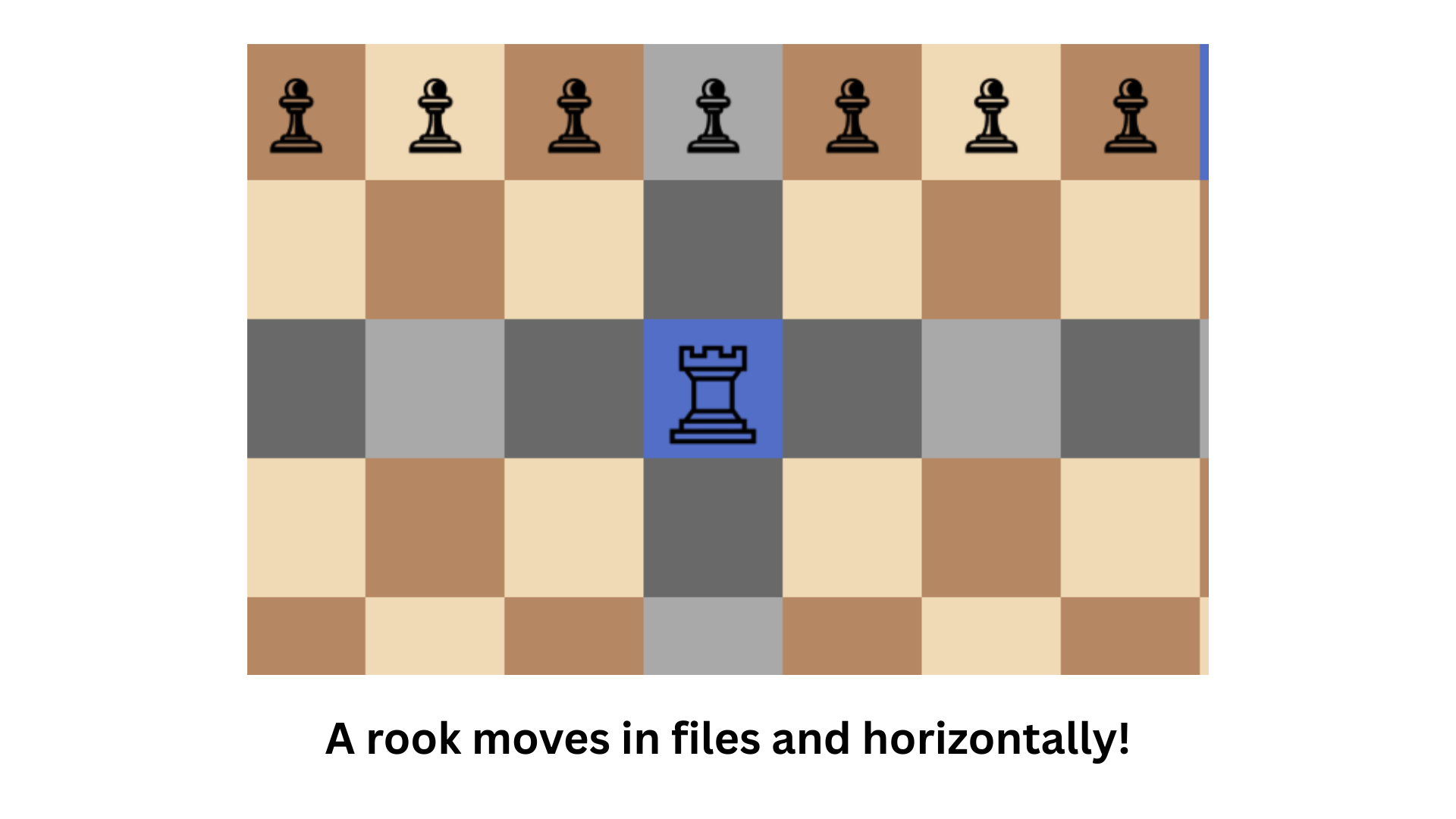
Fig. 3 - How A Rook Moves
4. And now, probably one of the most popular pieces on the board, The Queen! she can move quite literally like any piece, other than the knight (Fig. 4). May it be diagonal, along the files, one place, two places anyhow!
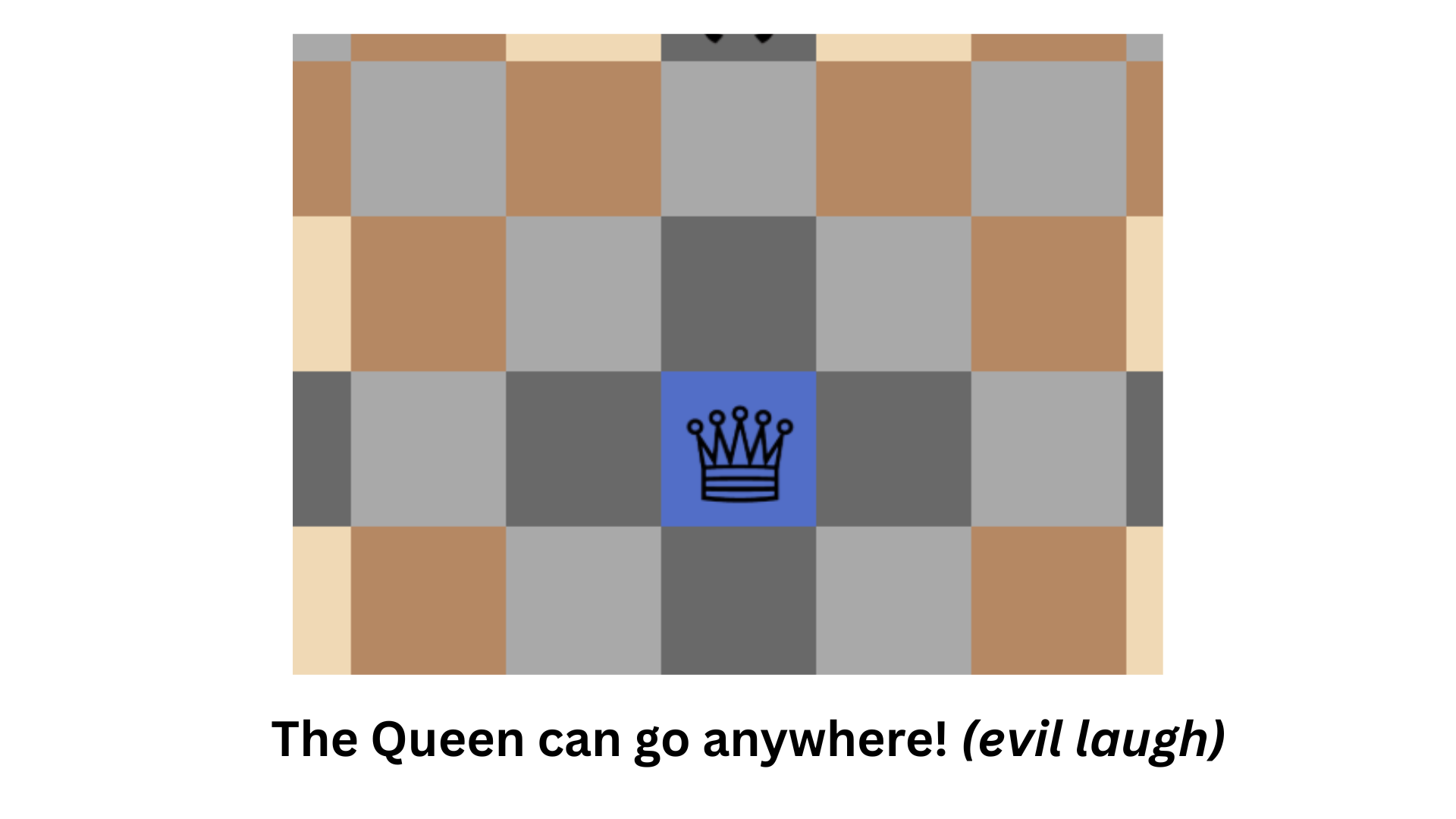
Fig. 4 - How The Queen Moves
5. Lastly, the most important and valuable piece in the game, the King. Essentially, this piece has a piece value of infinite, although he is definetely the most useless piece on the board. The king moves in every direction, but only one place (Fig. 5). If the king has no moves where it can't be captured by the enemy piece, it is in a checkmate and the player loses. You'll learn more about this in the rules section.
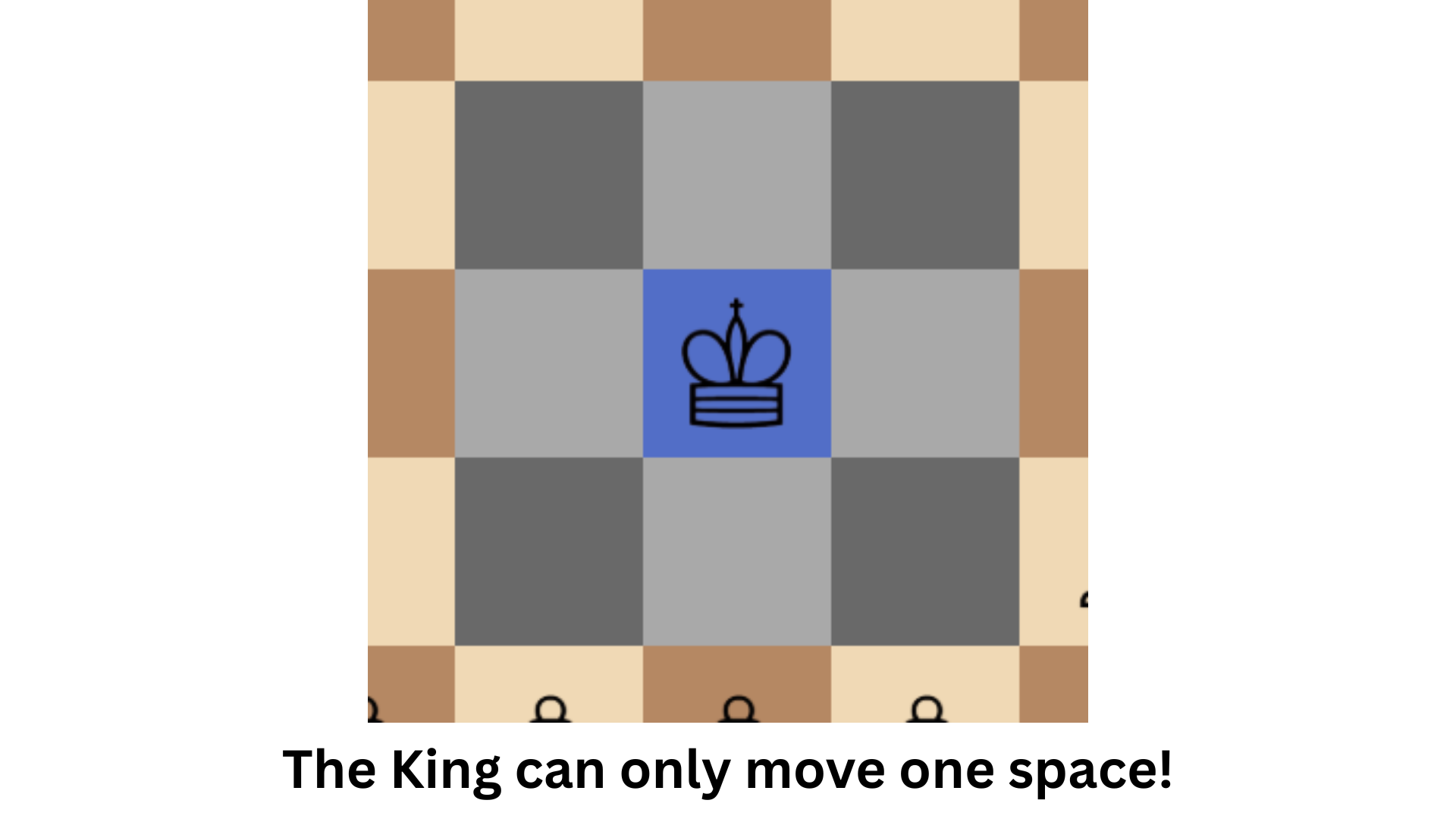
Fig. 5 - How The King Moves
The Rules
1. Castling
Castling happens when your King hasn't moved, and your rook towards the side you're about to castle hasn't been capture or moved. When these conditions are met and there's no pieces between the king and rook, they may switch sides (Fig. 6-1), shown in figure 6-1 is short castling, shown in figure 6-2 is something known as long castling.
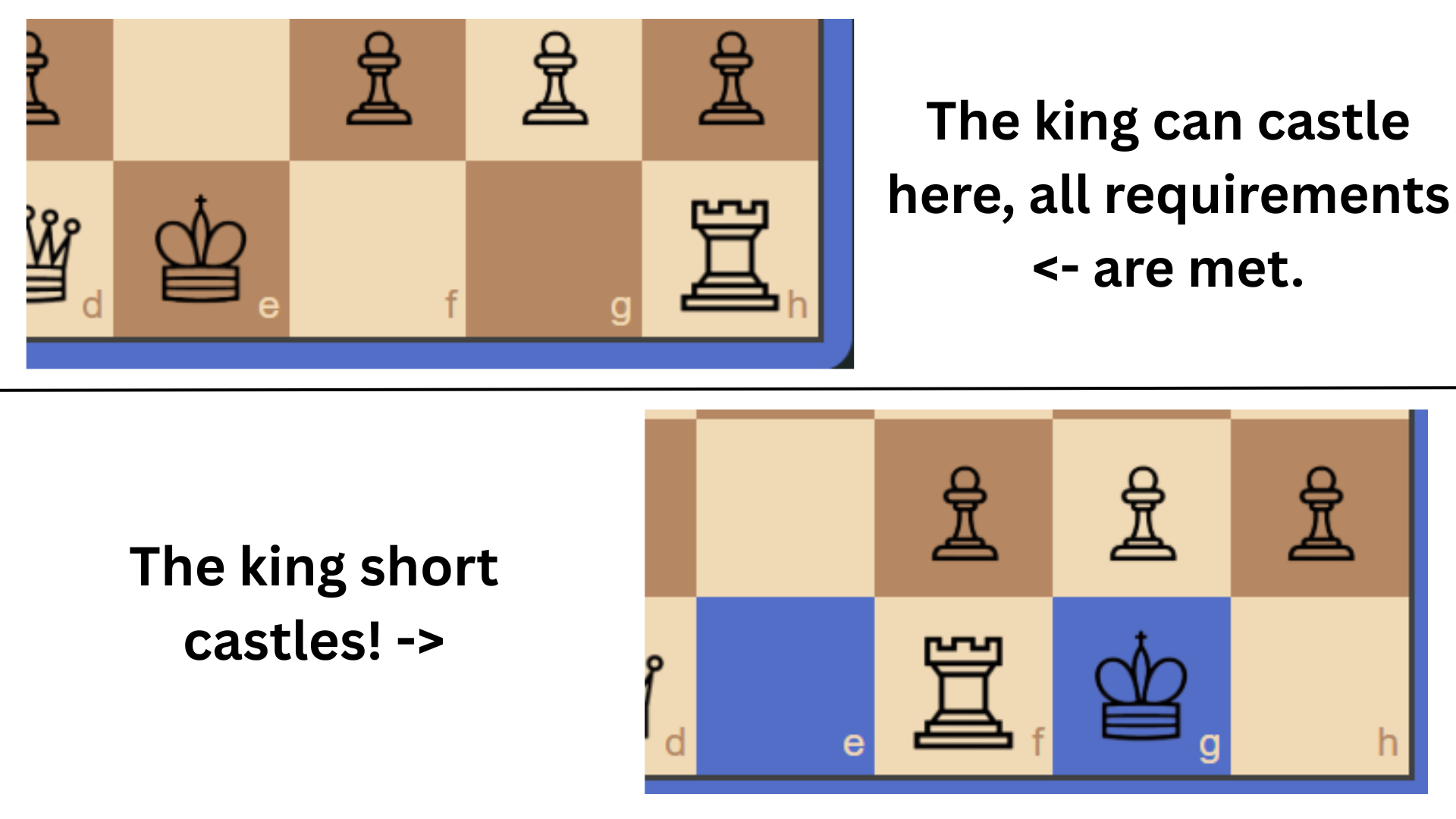
Fig. 6-1 - Short Castling
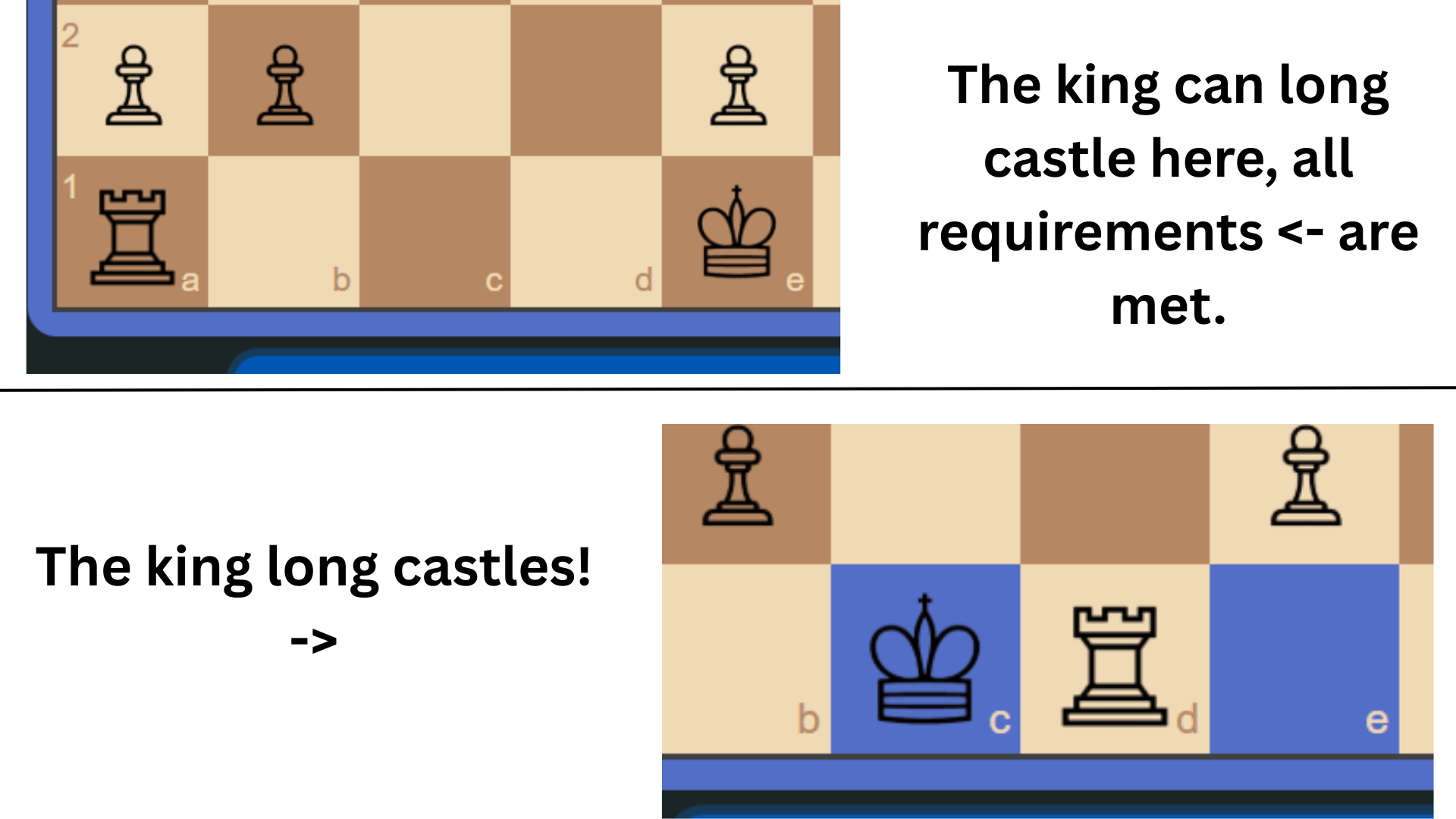
Fig. 6-2 - Long Castling
2. Check, Checkmate and Stalemate
1. Check - When the king is being attacked by any piece, and the king is able to get out of the attack, block it or capture the attacking piece, it's called a check (Fig. 7).
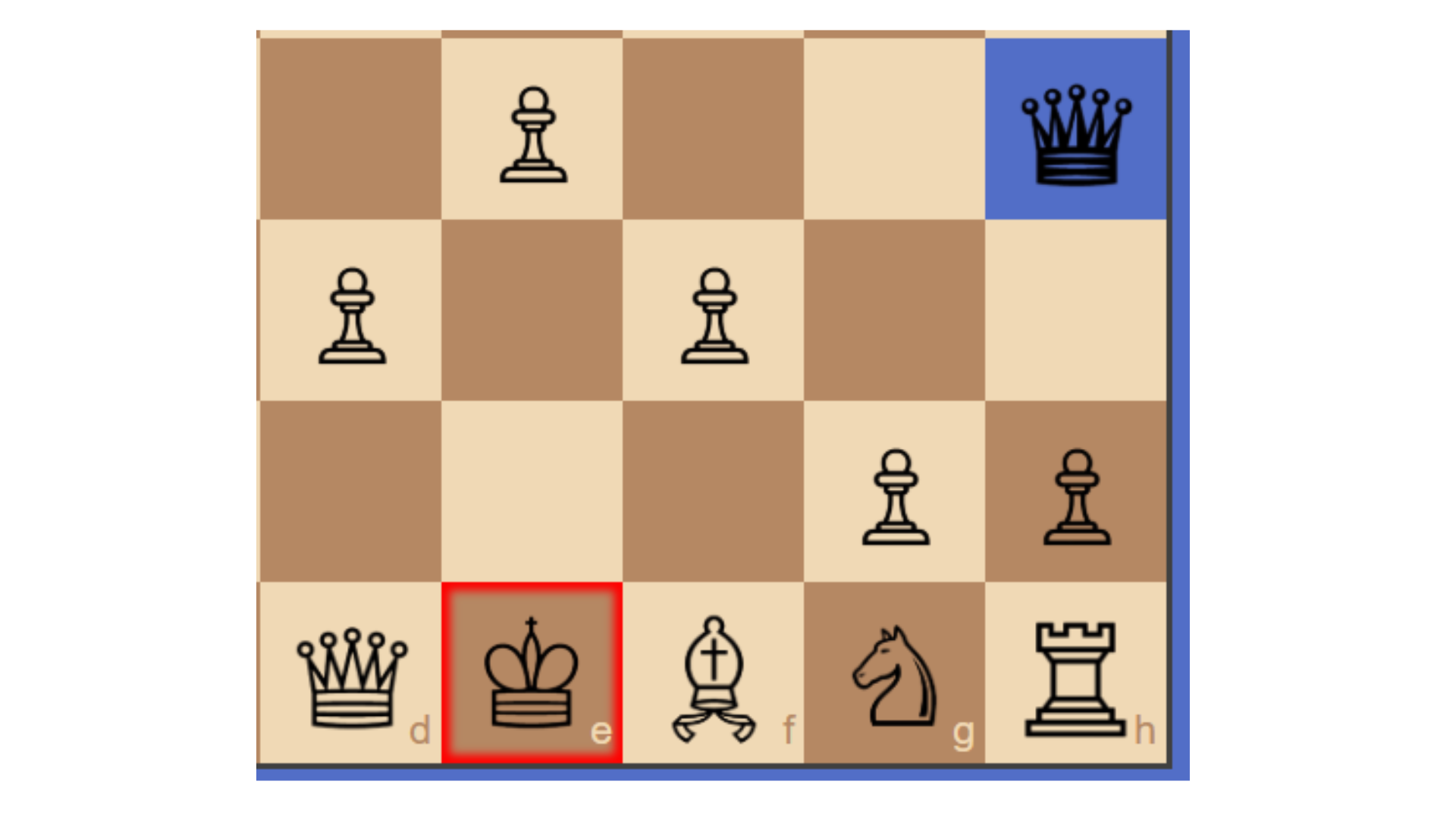
Fig. 7 - The King is in Check!
2. Checkmate - When the king is being attacked by any piece (or is in check), and the king is NOT able to get out of the attack, block it or capture the attacking piece, it's called a checkmate (Fig. 8).
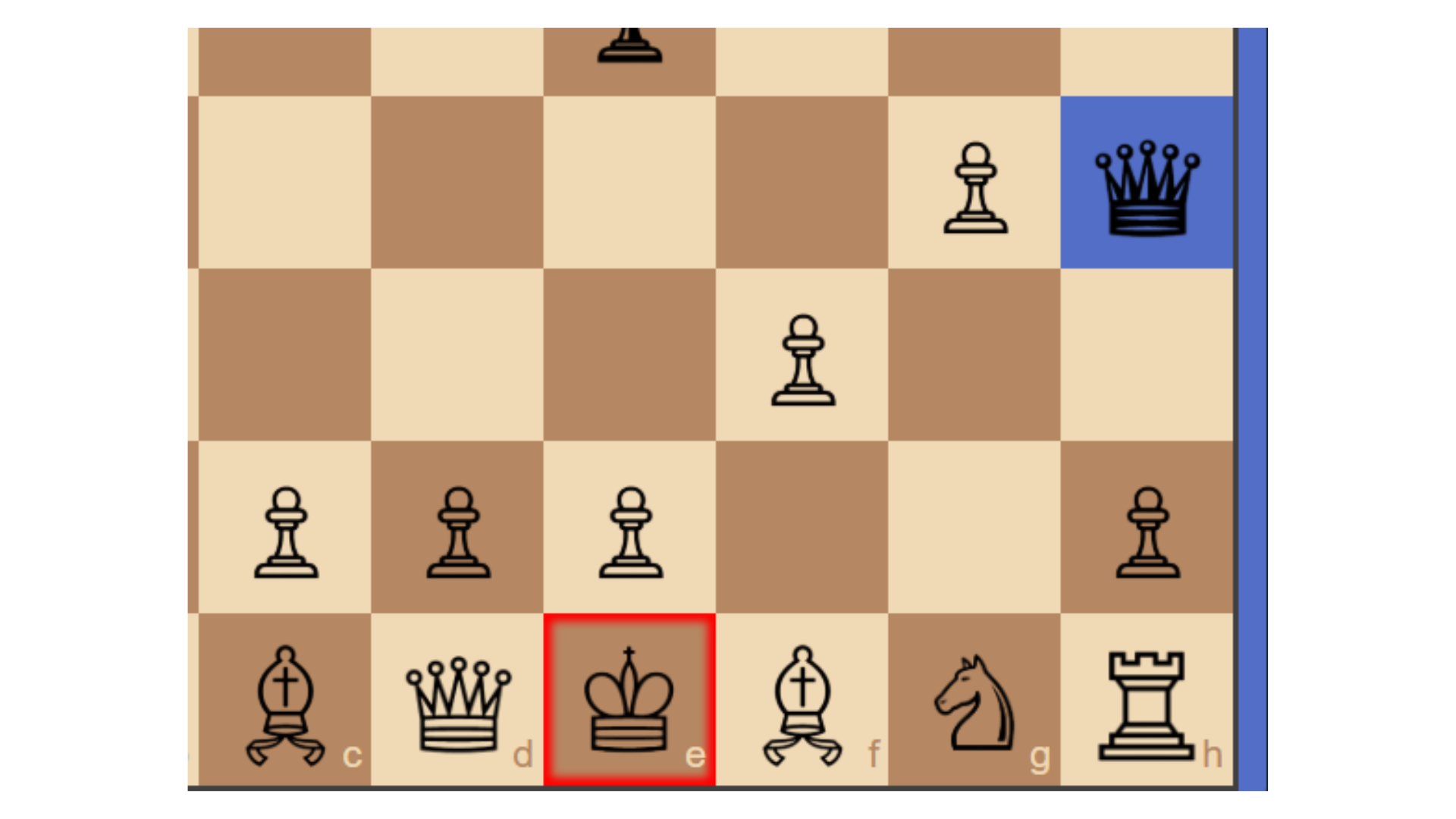
Fig. 8 - The King is in Checkmate! White loses.
3. Stalemate - When the either side's king is NOT being attacked by any piece and is NOT in check, and the either one side has no legal moves (moves which would put the king in danger) or both sides don't have enough pieces to give a checkmate (Fig. 9)
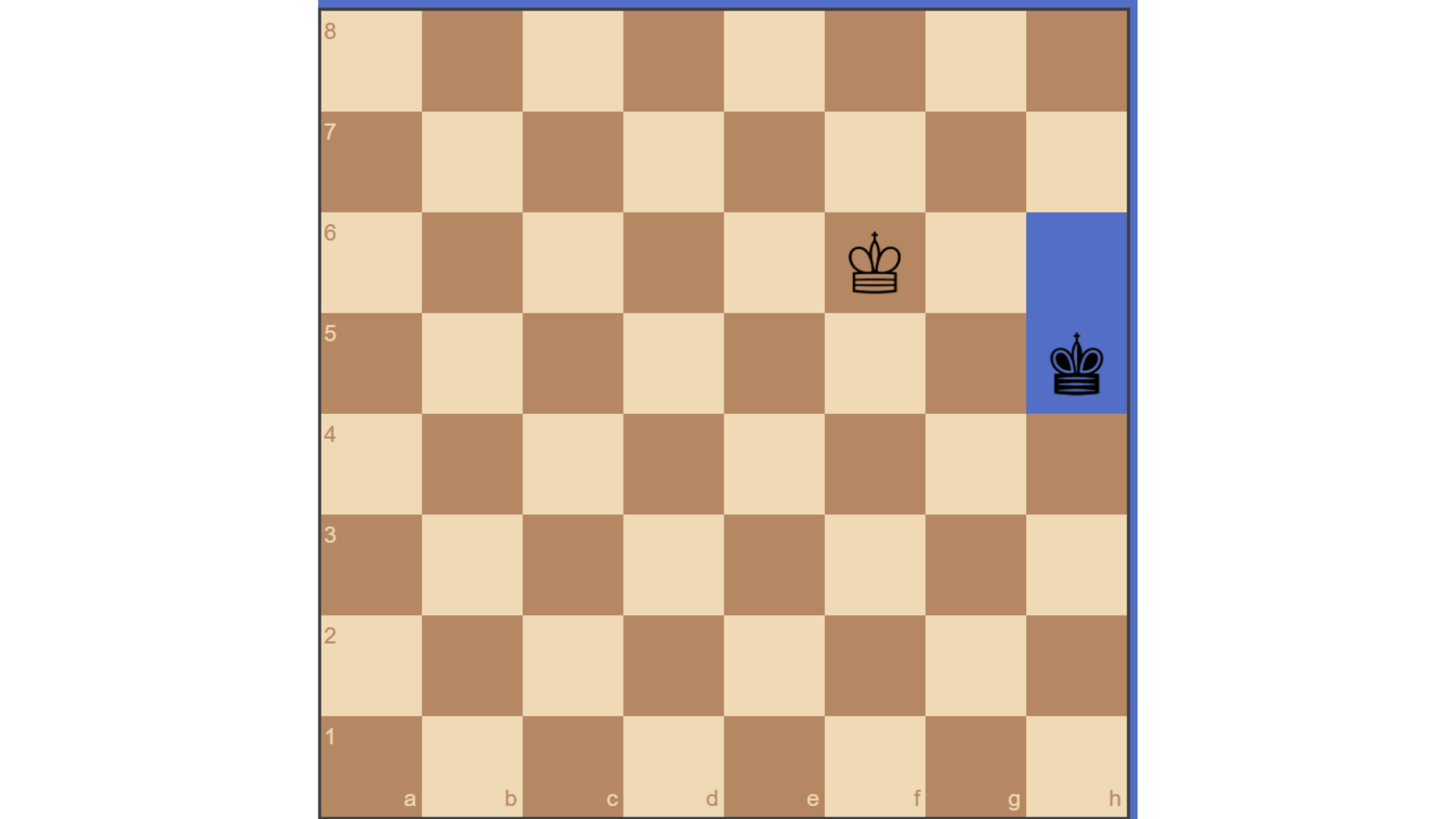
Fig. 9 - Stalemate! it's a draw.
Neither side has the advantage (+0).